Contact details +6492127305
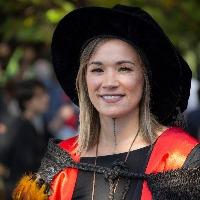
Dr Teah Carlson BSocSci, BsocSci(Hon), MAP, PhD
Research Officer
Doctoral Co-Supervisor Whariki Research CentreResearcher, evaluator, artist and academic. I draw on these identities to express, connect and articulate Indigenous solidarity, self-determination and hope. Community psychology trained and practising as a Post-Doctoral Research Fellow. My work highlights the importance of the Indigenous voice and control with respect to the design and delivery of health services, qualitative methods, strategy and evaluation. She has a PhD in Public Health, which was a Health Research Council-funded project entitled ‘Kaupapa Māori evaluation: Transforming health literacy.’ The doctoral research was about mainstreaming Indigenous health literacy practice, building capacity for institutional change at all levels; health workforce, organisations, systems all contributing towards building health literacy. The research is grounded on the underpinning principle of self-determination promoting the re-claiming of health literacy as a space for Indigenous peoples to be ourselves, a space that is negotiated, adaptive and shaped by people, whānau and communities.
Mai i te toka-a-taiau ki te-taumata-ō-Apanui. Dr Teah Carlson is a kairangahau/kaupapa Māori researcher and evaluator at SHORE and Whāriki Research Centre, Massey University. She has experience in qualitative methods, strategy and evaluation, especially involving working with Māori communities where collaboration, partnership and participatory community action were key to the research development, process and outcomes. Her strengths are in kaupapa Māori research, evaluation, participatory action research, community psychology, co-design and co-creation.
Professional
Contact details
-
Ph: 094140800
Location: Level 6, 90 Symonds Street
Campus: SHORE and Whāriki Research Centre
Qualifications
- Bachelor of Social Sciences - University of Waikato (2006)
- Bachelor of Social Sciences with Honours - University of Waikato (2009)
- Masters in Applied Psychology - University of Waikato (2011)
- Doctor of Philosophy - Massey University (2018)
Research Expertise
Research Interests
Kaupapa Māori research/evaluation/theory, wairua methodologies, wayfinding leadership, rangatahi / youth development, action research, model of care, allied health, hauora, health and wellbeing, community psychology, health literacy, cultural safety, decolonisation, Indigenisation, co-creation and art-based methods.
Thematics
Health and Well-being
Area of Expertise
Field of research codes
Kaupapa Maori Psychology (170108):
Medical And Health Sciences (110000):
Psychology (170100):
Psychology And Cognitive Sciences (170000):
Public Health and Health Services (111700)
Keywords
Kaupapa Māori, Kaupapa Māori theory, Kaupapa Māori evaluation, co-design, co-creation, participatory research, participatory action research, participatory community action research, Kaupapa Māori psychology, Indigenous psychology, psychology, qualitative research and social science.
Research Projects
Current Projects
Project Title: Hapai te hauora: Breathing your ancestors into life
Date Range: 2024 - 2028
Funding Body: Health Research Council of New Zealand
Project Team:
- Dr Teah Carlson - Project Leader
Research Outputs
Journal
[Journal article]Authored by: Carlson, T.



[Journal article]Authored by: Carlson, T.
[Journal article]Authored by: Carlson, T.
[Journal article]Authored by: Carlson, T., McCreanor, T., Moewaka Barnes, H.
[Journal article]Authored by: Carlson, T., McCreanor, T., Moewaka Barnes, H.
Teaching and Supervision
Teaching Statement
Graduate Supervision Statement
I take a relational, kaupapa Māori and community psychology-informed approach to graduate supervision that emphasises whakawhanaungatanga, critical reflexivity, and decolonial practices. My supervision relationships are grounded in shared values, clear expectations, and regular, structured engagement, while remaining responsive to whānau, work, and community realities. I work alongside students as emerging colleagues, supporting them in developing confidence in their own voice, tikanga, and positionality as tangata whenua, Indigenous, tauiwi, and allied researchers.
My areas of interest and speciality include Kaupapa Māori research methodologies, public and community health, evaluation, wayfinding leadership, and organisational and systems change. I have particular expertise in projects that centre whānau, hapori and mana motuhake, including kaupapa focused on maramataka, mana wāhine, Māori governance, hauora, and decolonial practice in institutions and services. I am comfortable supervising qualitative, mixed-methods, and practice-led theses, especially when students are working in partnership with communities, agencies, or kaupapa Māori providers. I support students to navigate ethics, Indigenous data sovereignty, relational accountabilities, and the politics of knowledge production.
My supervision experience spans PhD and Master's students across universities and wānanga in Aotearoa and internationally. I have served as a primary PhD supervisor in public health at Massey University and as a PhD advisor for projects at Otago University, the University of Auckland, Te Whare Wānanga o Awanuiārangi and the University of Copenhagen. I have supervised Master's research in health psychology, Māori health, applied Indigenous knowledge, and organisational resilience and change, and examined a wide range of Master's and PhD theses focused on Māori and Indigenous health, evaluation, governance, organisational change and community practice. This breadth of supervision and examination experience outside Massey, including with AcademyEX, Te Wānanga o Aotearoa, Te Herenga Waka and other institutions, means I bring a nuanced understanding of diverse graduate pathways, institutional contexts and Indigenous-led scholarship to my supervision practice.
Dr Teah Carlson is available for Masters and Doctorial supervision.
Summary of Doctoral Supervision
| Position | Current | Completed |
|---|---|---|
| Co-supervisor | 1 | 1 |
Current Doctoral Supervision
Co-supervisor of:
-
Katie Simon
-
Doctor of Philosophy
Nga haerenga purakau - trauma-filled whanau journeys of hope, to healing and prosperity.
Completed Doctoral Supervision
Co-supervisor of:
-
2024
-
Isla Emery-Whittington
-
Doctor of Philosophy
Decolonising Mahi: A Kaupapa Māori Theory and practice framework